With wireless systems, it’s very difficult to predict the propagation of radio waves and detect the presence of interfering signals without the use of test equipment. Even if the system implements omni-directional antennas, radio waves don’t really travel the same distance in all directions. Instead walls, doors, elevator shafts, people, and other obstacles offer varying degrees of attenuation, causing the RF (radio frequency) radiation pattern to be irregular and unpredictable. As a result, it’s absolutely necessary to
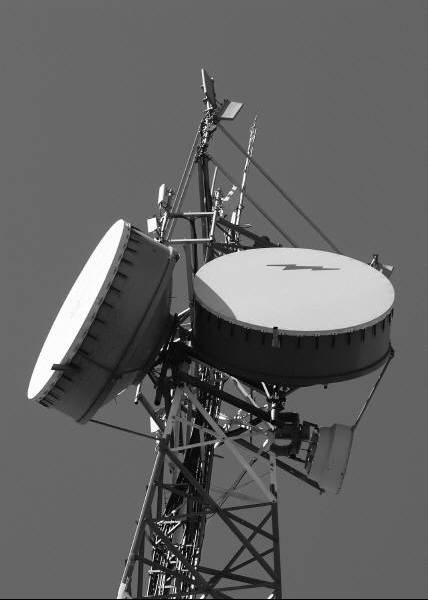
When considering doing a wireless installation of a point to point wireless Ethernet bridge, also known as fixed wireless backhaul, there are several options. Say you want to connect two buildings 4 miles apart and the path has good line of sight ("LOS") with proper Fresnel Zone clearance. Do you go with a licensed microwave link or an unlicensed wireless Ethernet bridge system?
The term "Microwave" is a broad term that covers the UHF (Ultra High Frequency with frequencies between 300MHz and 3GHz) to the EHF (Extremely High Frequency with frequencies between 30GHz to 300GHz). Licensed microwave links and unlicensed wireless Ethernet bridges typically operate in the SHF (Super High Frequency with frequencies between 3GHz to 30GHz) and the EHF bands.
A hotspot is any location where Wi-Fi network access (usually Internet access) is made publicly available. You can often find hotspots in airports, hotels, coffee shops, and other places where business people tend to congregate. Hotspots are considered a valuable productivity tool for business travelers and other frequent users of network services.
Tethering is the use of a mobile device such as a mobile phone to supply Internet access for another device which is otherwise unconnected, using the mobile device as a modem. This can be done through Bluetooth wireless technology, portable Wi-Fi hotspots, or cables (such as USB).
With a wireless printer, you can print documents on a Mac computer without needing to directly connect to the printer using a USB cable. As long as you have the appropriate printer driver installed on your system, the Mac computer will be able to remotely connect to the printer and send files to it.
These days wireless networking products are so ubiquitous and inexpensive that just about anyone can set up a WLAN in a matter of minutes with less than $100 worth of equipment. This widespread use of wireless networks means that there may be dozens of potential network intruders lurking within range of your home or office WLAN.